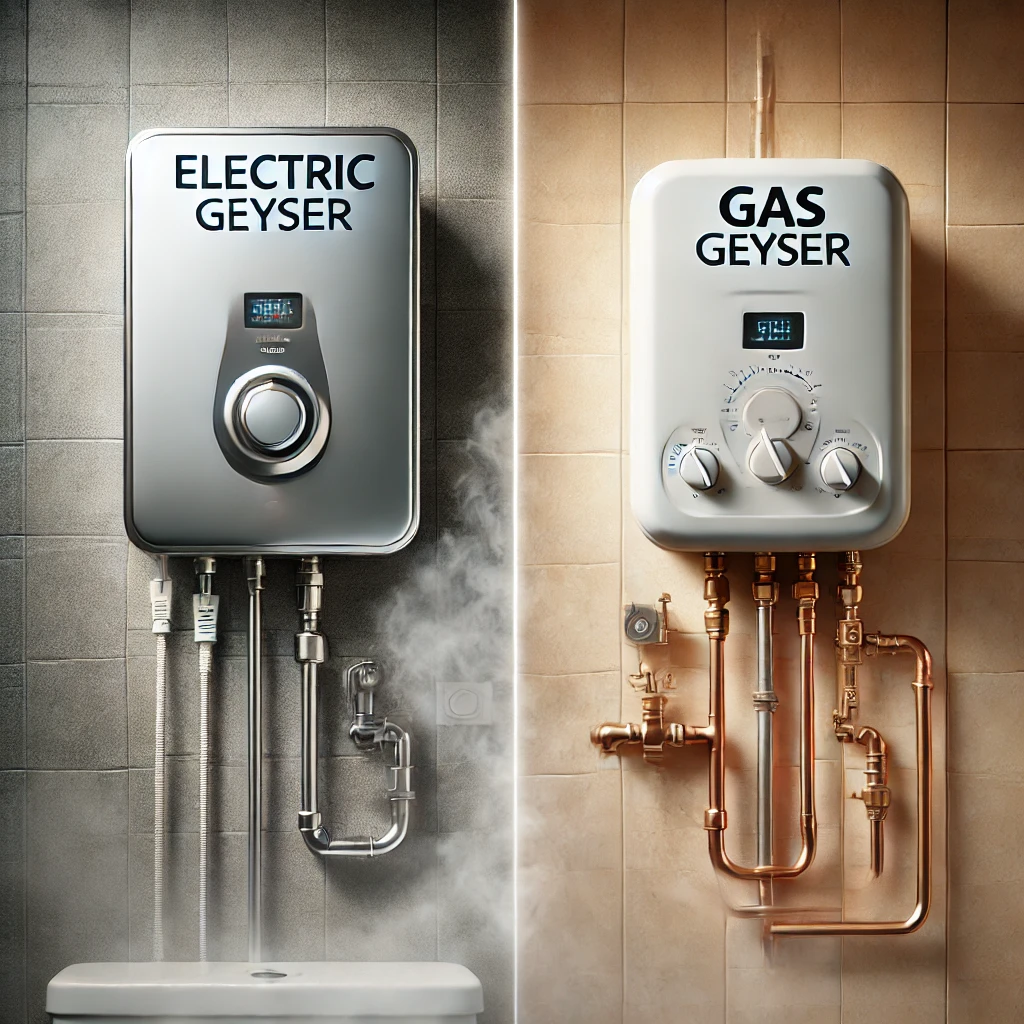
When choosing a geyser for your home in Nepal, understanding the differences between electric and gas geysers is essential. Each type has unique features, benefits, and considerations to ensure your water heating needs are met effectively. This guide will help you determine which geyser is best suited for you and your household.
- Understanding Electric and Gas Geysers
Electric Geysers
Powered by electricity.
Heats water by electric coils or heating elements.
Comes in various storage capacities to accommodate different usage needs.
Gas Geysers
Uses LPG (liquefied petroleum gas) or natural gas.
Heats water using gas burners, offering quick heating.
Typically smaller in size than electric storage geysers, ideal for immediate water heating.
- Key Factors to Consider
a. Initial Cost
Electric Geysers: Generally, electric geysers tend to be more affordable initially. They’re widely available across Nepal, making them a popular choice.
Gas Geysers: The initial price of gas geysers is often a bit higher, especially if considering installation needs (like a gas line). However, they can save money over time due to lower operational costs.
b. Operating Costs
Electric Geysers: Running costs for electric geysers can be high in Nepal, especially if you rely on electric heating for extended periods. Electricity prices vary, and usage during peak hours may increase costs.
Gas Geysers: These are more cost-effective, especially in areas where LPG is readily available and affordable. The gas is only used while heating water, so it’s efficient.
c. Heating Time and Efficiency
Electric Geysers: They may take longer to heat large volumes of water but can retain warmth for a long time with a good insulation tank.
Gas Geysers: Known for instant heating, gas geysers are perfect for families who need quick hot water access without waiting.
d. Safety Concerns
Electric Geysers: Safer and easier to install, but they may pose risks in areas with frequent power surges.
Gas Geysers: Require proper ventilation and regular maintenance to prevent gas leaks, as improper usage can pose safety risks.
e. Environmental Impact
Electric Geysers: Often contribute to higher carbon emissions if the electricity source is fossil-fuel-based. Opting for solar hybrid models could be a greener choice.
Gas Geysers: Emit fewer emissions than electric geysers powered by coal-based electricity, but they still contribute to carbon emissions.
If you live in an area with frequent power cuts or expensive electricity**: A *gas geyser* might be more convenient and cost-effective.
Which Geyser Is Right for You?
- If you’re in a well-connected urban area with stable power: An electric geyser could be more practical, especially if you’re interested in energy-efficient models.
- Consider your household size: Larger households may benefit from a gas geyser for quick, on-demand hot water.
| Factor | Electric Geyser | Gas Geyser |
| Cost | Lower initial cost, higher running cost | Higher initial cost, lower running cost |
| Heating Speed | Slower, ideal for long-term heating needs | Quick, ideal for instant usage |
| Safety | Safer, requires less maintenance | Requires proper ventilation, risk of gas leaks |
| Eco-friendliness | Depends on electricity source, opt for solar hybrid | Emits less than coal-based electricity |
Conclusion
Choosing between an electric and gas geyser in Nepal depends on several factors, including your budget, heating needs, and available infrastructure. With the right choice, you’ll enjoy a reliable hot water supply and keep your energy costs manageable.
For More Info Please Visit Our Store.
Leave a Reply
You must be logged in to post a comment.